
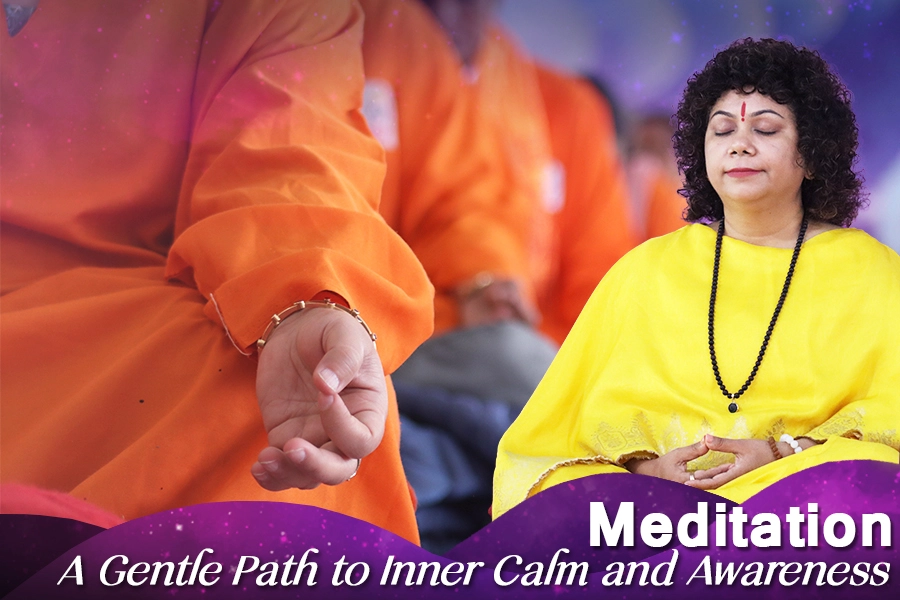
Meditation: A Gentle Path to Inner Calm and Awareness
Many people wonder how to meditate. More important than the method, however, is clarity of intention. Why do you want to meditate? What do you seek to achieve? This clarity makes the entire process easier. Meditation is an inward journey. As you progress on this path, you begin to experience abundant energy that once lay dormant within. It is simple, and anyone can do it. One of the most accessible practices today is mindfulness meditation, which gently trains the mind to remain present and aware without judgment. How to Begin Your Practice To meditate, you need to: Sit in a quiet place Meditation done in a place free of any kind of distraction is ideal. You can do it on a chair, on the ground, in your car, or in a peaceful corner. The aim is to settle into the present moment — the foundation of mindfulness meditation practice. Set minimum time limit Even if you are a beginner, you must practise it for at least 5 minutes to experience noticeable results. Any meaningful achievement requires commitment. Many beginners also choose a mindfulness meditation online course to stay consistent and guided in their early stages. Breathe deeply Now, close your eyes. Begin gentle deep breathing with focus on your incoming and outgoing breaths. As you inhale, your belly expands; as you exhale, your belly gently contracts. This breathing awareness forms the heart of healing meditation, allowing the nervous system to relax naturally. Observe your thoughts What thoughts appear in your mind when you meditate? Notice them. Don’t react to them. Whenever your mind distracts, gently bring your attention back to your breath. There is no need to analyse your thoughts. Just go with the flow — this awareness is the essence of mindfulness meditation. Guided Meditation for Beginners If you are a beginner and find it difficult to meditate, you can try guided mindfulness. In this, an audio or video leads you through the process. It helps you enter and experience the subtleties of meditation naturally. Many people today start through a structured mindfulness meditation online course, which provides step-by-step guidance and daily practice routines. Those looking for ways regarding how to overcome anxiety and fear often find meditation helpful in achieving calm and relief. They can try any of the following guided practices: • Basic breath awareness meditations• Body scan practices for physical awareness• Loving-kindness and compassion meditations• Walking and movement meditations These techniques are widely recommended by modern healing websites and wellness practitioners across the world. Spiritual Literature to Support Meditation To support your journey, you may explore some of the best and globally acclaimed spiritual books, such as: • The Bhagavad Gita• The Dhammapada• Tao Te Ching• The World in Transition• I Am That• Stepping into Happiness• Ikigai These teachings help practitioners understand consciousness, awareness, and inner peace more deeply. Meditation and Emotional Healing There are people across the world whose sole purpose of meditation is to attain spiritual growth. Regular practice gradually silences mental noise. As the mind calms down, spiritual seekers find it easier to maintain their focus during sadhana. Many practitioners also experience emotional release and inner balance through healing meditation practices. Over time, grudges and negative memories slowly dissolve, making space for peace and stability. For individuals searching how to overcome anxiety and fear, meditation becomes a powerful and natural solution. Reliable healing websites and spiritual communities often share guided sessions that help beginners develop consistency and confidence. With a calm and stable mind, it becomes easier to connect with higher consciousness. Blissful Living Meditation by Dr Archika Didi is one such unique practice that has transformed many lives. This exclusive meditation teaches simple yet effective techniques, helping individuals cherish true happiness within effortlessly. Since it operates on the subconscious level, it reprograms the mind to develop positive patterns. Consequently, the practitioners feel increased confidence, clarity, courage, and emotional harmony – an entirely new life. Take a Pause. Let Life Unfold Within You We live in a world full of stress, fears, doubts, negativity, and constant distractions. Among these barriers, meditation becomes a sanctuary where one can breathe a sigh of relief, experience inner peace, attain self-discovery, and achieve overall well-being. By practising mindfulness meditation regularly, individuals begin to reconnect with themselves and live with awareness rather than reaction. Incorporate meditation into your daily life with Blissful Living Meditation to establish a deeper connection with yourself and the world around you.
Meditation: A Gentle Path to Inner Calm and Awareness Read More »